If You Don’t Teach Spelling, How Do Unschoolers Learn It?
Learn what actually helps kids spell without curriculum, lists, or pressure.
One of the most common worries parents have about unschooling is spelling.
If no one is assigning weekly word lists… if no one is circling mistakes in red… if spelling isn’t being “taught” the way we were taught, then how do unschoolers ever learn to spell?
It’s a fair question. Most of us grew up believing spelling only happens through repetition, correction, and memorization. Letting go of that can feel risky.
The good news? Unschoolers do learn to spell and often with more confidence and long‑term accuracy than kids who were drilled early.
Do Unschoolers Really Learn to Spell Without Being Taught?
Yes.
Spelling in unschooling isn’t treated as a separate subject. It develops as a skill, alongside reading, writing, and real communication.
Just like speaking develops before grammar lessons, spelling develops through use, not instruction first.
In real life, spelling exists to serve meaning. Unschooling keeps that order intact.
Spelling, the Traditional Way
If you have perused my “About Me” page, then you know I began my career as a primary school teacher.
During that time, I, of course, taught spelling in the traditional schooling way. In doing so, I consistently witnessed students who could score very well on a weekly spelling test but would also consistently misspell those same words in their writing. So what was going on?
Rote memorization for the test. Prompt release of information dump.
So why was this happening? Well, in my experience, it is because the learner does not need (or is not interested in) the information, except for a good grade on the test. In turn, they take in the information, regurgitate it for the test, and quickly move on with no real connection to it; therefore, it does not remain with them.
The key to changing this lies in the principles of unschooling.
How Spelling Actually Develops in Unschooling
Instead of memorizing lists, unschoolers encounter spelling through everyday life:
- Reading books, messages, captions, instructions, and labels
- Writing texts, notes, stories, lists, game chats, and emails
- Seeing words repeated naturally in meaningful contexts
- Noticing patterns over time (even without naming them)
- Word finds, crosswords, word games on apps
- Following subtitles while watching television
Because the focus stays on communication, kids are free to experiment with spelling without fear of being wrong. That freedom matters more than we realize.
Confidence fuels learning.
What About Misspellings and “Bad Habits”?
Misspellings are often what worry parents most.
But early and ongoing misspellings are not a sign of failure. They’re a sign that a child is using language.
As children learn to spell words, they first spell phonetically, or by what they hear. Accuracy will increase as exposure to language increases. Self-correction will happen naturally when spelling matters to them.
Constant correction can actually slow this process by shifting attention away from meaning and toward fear of mistakes.
Spelling improves fastest when kids care about being understood, not when they’re being evaluated. BAM!
My Child Is Older and Still Struggles With Spelling…Should I Be Worried?
This question comes up a lot, especially for parents of tweens and teens.
First, it helps to redefine what “older” means. Many children don’t fully consolidate spelling until later than school timelines suggest, especially bright, creative, big‑picture thinkers.
Signs spelling is developing, even if it looks uneven:
- Your child reads comfortably
- They write voluntarily (even with errors)
- They notice mistakes after the fact
- They improve when spelling matters to them
In the teen years, especially, spelling often tightens rapidly when writing becomes purposeful. For example, when filling out job applications, working on creative projects, or communicating online.
Unschooling doesn’t prevent spelling development. It delays pressure, not learning.
What Unschooling Parents Can Do (Without Turning It Into School)
You don’t need a spelling curriculum. But you can support spelling development.
Make writing useful, not performative. Have your child write thank-you notes for gifts. Make lists for the grocery store. Send texts or emails to family and friends.
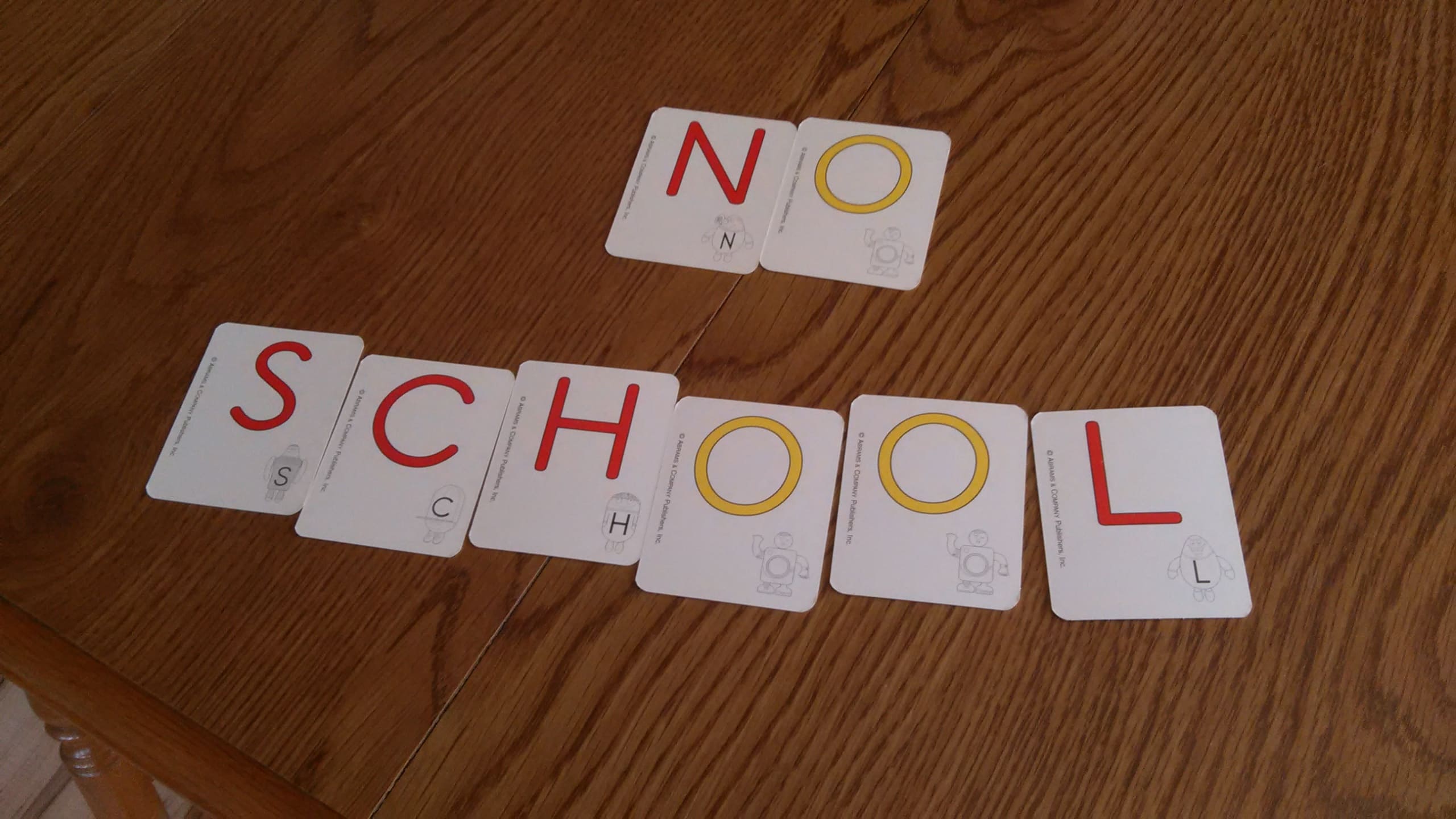
Offer tools when interest appears. Set out baskets of colorful pens or markers. Leave a stack of generic cards out to send notes to friends. Introduce spell check, dictionaries, and word games. Remember, playing video games and turning on subtitles are also tools to learn how to spell!
Spell the word. I can’t emphasize this one enough…..JUST SPELL THE WORD WHEN ASKED. I remember being a child and hearing my teacher say, “Sound it out” whenever someone needed help with a word. It led me to fear asking for help because I feared I would be wrong. And let’s face it, sounding out only works for some words.
Trust their readiness. Just like with any learning, you can’t force it if you truly want them to learn it. When it becomes important to them, they will get it.
Support works best when it’s responsive, not imposed.
What if My Child Wants a Spelling Program?
Often, we fall into the trap of believing that unschooling is about no curriculum whatsoever, but that is not true.
Unschooling, or interest-led learning, is about allowing the learner’s interests to direct the learning.
If you have a “schooly” learner who thrives on or asks for workbooks or curriculum, then provide workbooks and a linear curriculum.
Some learners love to delve into programs and soak it all up! Worksheets bring them joy. So why stop them? True interest-led learning demands that we don’t force them into some preconceived mold, but rather facilitate learning their way.
The only right way is the way that works for the learner.
That being said, there are great programs available to those who desire them.
All About Spelling and Logic of English are great options. But, as always, they are only great options if it is what your learner desires.
Final Thoughts: The Big Picture on Spelling
Don’t fret. Spelling isn’t something unschoolers miss.
It’s something they grow into through reading, writing, curiosity, and time.
When spelling is allowed to develop naturally, kids don’t just learn how to spell words.
They learn that language belongs to them.
Want to learn more about unschoolers and literacy? Click here for my post on how my unschooler learned to read.